
Understanding Mechanical Bulk Water Meters in South Africa
⬅ Back to Posts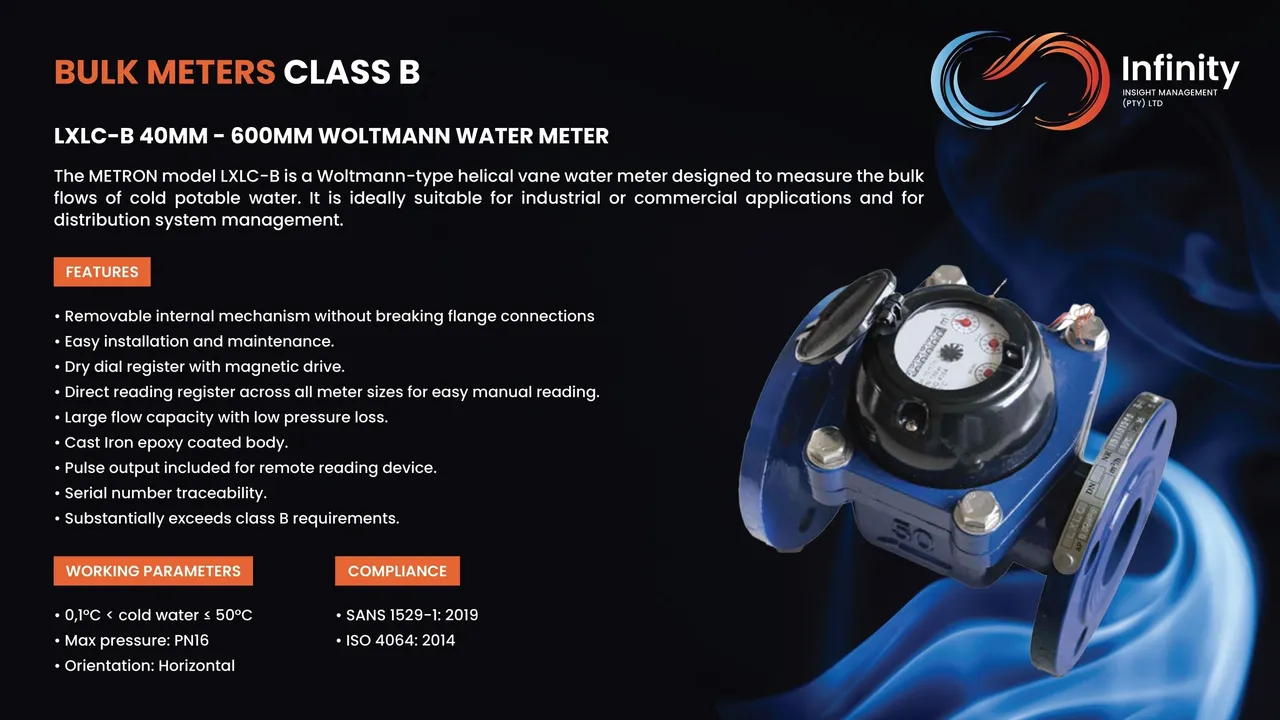
Water management is a critical issue in South Africa, a country often facing severe water scarcity. Effective monitoring and management of water usage are essential to ensure sustainable water supply. Mechanical bulk water meters play a significant role in this endeavor, providing a reliable method for measuring water flow in various applications.
What are Mechanical Bulk Water Meters?
Mechanical bulk water meters are devices used to measure the volume of water flowing through a pipeline. These meters typically operate using a mechanical mechanism, such as a turbine or propeller, that moves in response to the water flow. The movement is then translated into a readable measurement, often displayed on a dial.
Importance in South Africa
In South Africa, where water conservation is paramount, mechanical bulk water meters are widely used for several reasons:
- Accuracy and Reliability: These meters provide accurate readings, which are essential for billing purposes and for monitoring water consumption patterns.
- Durability: Mechanical meters are known for their robust construction, making them suitable for various environments, including remote and rural areas.
- Cost-Effective: Compared to more sophisticated electronic meters, mechanical bulk water meters are generally more affordable, making them accessible for municipalities and water service providers with limited budgets.
Applications
Mechanical bulk water meters are used in several contexts in South Africa:
- Municipal Water Supply: They help municipalities monitor and manage water distribution effectively.
- Agriculture: Farmers use these meters to measure irrigation water usage, ensuring they adhere to water use regulations and avoid wastage.
- Industrial Use: Industries rely on bulk water meters to monitor their water consumption, helping them implement water-saving measures and comply with environmental regulations.
Challenges and Future Outlook
While mechanical bulk water meters are highly beneficial, they are not without challenges. Issues such as wear and tear, sediment buildup, and the need for regular maintenance can affect their accuracy over time. Additionally, with advancements in technology, there is a growing shift towards digital and smart water meters, which offer real-time data and remote monitoring capabilities.
However, mechanical bulk water meters remain a vital part of South Africa’s water management infrastructure. Their simplicity, durability, and cost-effectiveness ensure they will continue to be used extensively, especially in areas where advanced technology is not yet feasible.
In conclusion, mechanical bulk water meters are crucial tools in South Africa’s efforts to manage and conserve its precious water resources. As the country continues to develop its water infrastructure, these meters will play an essential role in ensuring efficient and sustainable water use across various sectors.