
How Slurry Electromagnetic Flow Meters Work
⬅ Back to Posts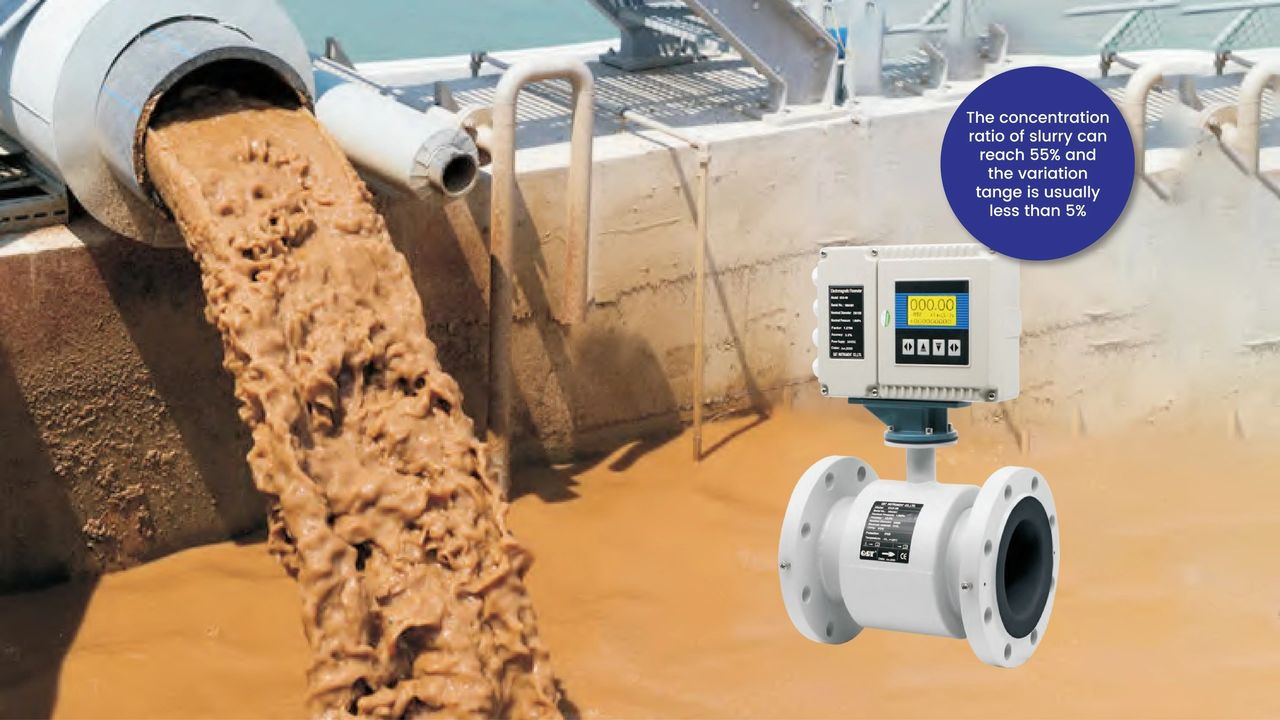
Slurry Electromagnetic Flow Meters are specialised devices used to measure the flow rate of slurries—mixtures of solid particles suspended in a liquid—through pipes. These flow meters are vital in industries such as mining, wastewater treatment plants, and pulp and paper.
These Electromagnetic Flow Meters operate on the principle of Faraday's Law of Electromagnetic Induction. Accourding to this principle, a voltage is induced when a conductive fluid passes through a magnetic field. In the context of a flow meter, the slurry itself acts as the conductive fluid. The meter consists of a pair of coils that generate a magnetic field, and electrodes placed perpendicular to the flow of the slurry detect the induced voltage. This voltage is directly proportional to the flow velocity of the slurry, allowing the flow meter to calculate the volumetric flow rate.
Key Advantages
Non-intrusive Measurement: One of the significant advantages of electromagnetic flow meters is that they have no moving parts in contact with the slurry. This non-intrusive design minimises wear and tear, making them highly durable and suitable for abrasive slurries.
Accuracy and Reliability: Electromagnetic flow meters provide high accuracy and are less affected by the physical characteristics of the slurry, such as viscosity, density, or flow profile. They can accurately measure flow even with varying solid concentrations within the slurry.
Minimal Maintenance: The lack of moving parts also means that electromagnetic flow meters require less maintenance compared to mechanical flow meters, leading to reduced downtime and operational costs.
Applications
Mining: Slurry flow meters are crucial in mining operations to measure the transport of mineral slurries, ensuring the efficient use of resources and maintaining process control.
Wastewater Treatment: They are used to measure the flow of sludge and other thick liquids, enabling better management of wastewater processes.
Pulp and Paper: In this industry, slurry electromagnetic flow meters measure the flow of pulp mixtures, contributing to the precision in the production process.
Challenges and Considerations
Despite their advantages, slurry electromagnetic flow meters must be carefully selected based on the specific properties of the slurry and the operating environment. The presence of highly abrasive or corrosive materials in the slurry can affect the longevity of the flow meter's lining and electrodes. Additionally, proper grounding and installation are essential to ensure accurate measurements, as electromagnetic flow meters can be sensitive to external electrical noise.
Slurry Electromagnetic Flow Meters offer a reliable and efficient solution for measuring the flow of slurries in various industrial applications. Their non-intrusive design, coupled with high accuracy and low maintenance needs, makes them a preferred choice in environments where slurry measurement is critical. Proper selection and installation are key to maximising their performance and lifespan.